
Cannabutter Slow Cooker Recipe: Decarb First
Written by the ÉCRU team · Published October 3, 2026
Cannabutter Recipe Slow Cooker: The Method That Actually Works
This cannabutter recipe slow cooker method works for one reason: the slow cooker only does half the job. Decarb 7 g of coarsely ground flower in the oven at 240°F (115°C) for 30-40 minutes first, then infuse it in the slow cooker in butter and water held at 160-190°F (70-90°C) for 1-2 hours, strain without squeezing, and let the fat set in the cold.
That order is the whole recipe. Most crock pot cannabutter failures are decarb problems, not cooker problems: raw or half-activated flower simmered in fat that never gets hot enough to finish the conversion. Get stage one right and the cooker is a good infusion vessel. Skip it and the batch tastes like cannabis while doing little else.
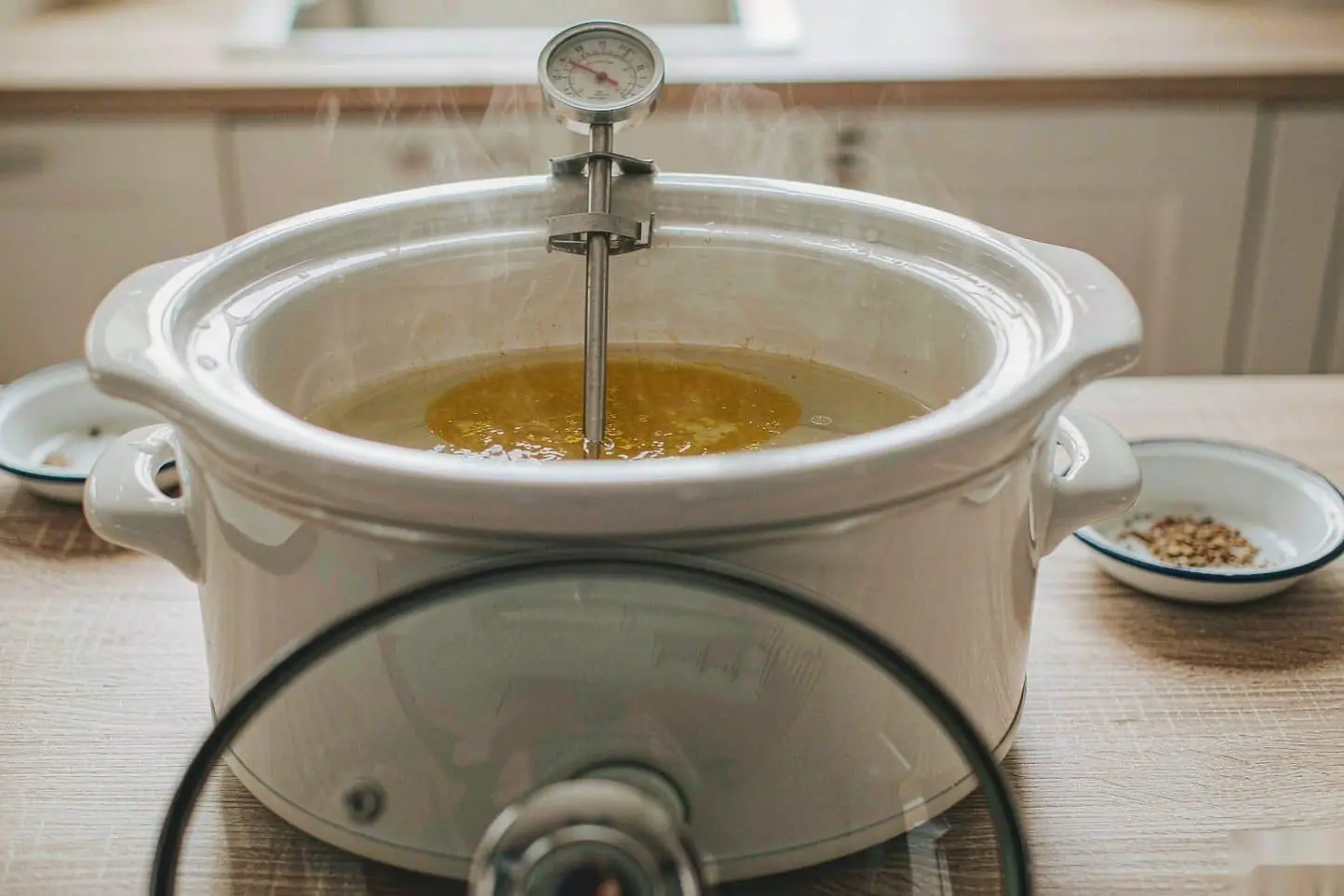
Stage two: butter and water held at 160–190°F, with the decarbed flower waiting alongside.
What you need
| Item | Amount | Notes |
|---|---|---|
| Flower, coarsely ground | 7 g (quarter ounce) | Coarse, like coffee grounds; fine powder turns the butter gritty |
| Unsalted butter | 227 g (1 cup / 2 sticks) | Unsalted keeps sodium under control in later baking |
| Water | 240 ml (1 cup) | Buffers against scorching; separates below the fat for the cold rinse |
| Slow cooker | 1 | Small is easier; a large cooker with a shallow batch swings more |
| Thermometer | 1, probe or instant-read | Non-optional; the dial setting is not a temperature reading |
| Cheesecloth in a mesh sieve | 1 setup | A coffee filter clogs once butter hits it |
| Heatproof glass jar with lid | 1 L (quart size) | Takes the whole batch with room to spare |
Grind before you measure the decarb, and keep the butter in the fridge until the flower is out of the oven.
Stage one: decarb in the oven, not the cooker
Cannabis stores its cannabinoids as acids, THCA rather than THC, and the acid form is not what produces the effect people want from an edible. That conversion needs dry material held at temperature for time. A slow cooker full of butter and water cannot deliver it: the contents sit below the needed temperature, the heat cycles on and off, and the steamy interior is the opposite of a dry-heat tray.
So stage one happens in the oven. Spread the ground flower in a thin layer on a lined tray and bake at 240°F (115°C) for 30-40 minutes. The numbers match our decarb temperature chart. Finished material is golden to light brown, dry, and toasted-smelling rather than green and grassy.
Two details decide this stage. Spread thin: a shallow layer reaches temperature as a unit, while a mound has a hot edge and a cool center. And verify where the herb sits, thermometer on the same rack as the tray. Household ovens drift well off the dial setting, and that drift is the most common cause of a batch that looks done and is not.
One honest warning: an open tray at 240°F smells, and the smell lingers. If that matters in your building, read how to decarb without the smell before you preheat.
Stage two: the slow-cooker cannabutter recipe infusion at 160-190°F
Melt the butter with the water on low, then check the liquid itself before the flower goes in: 160-190°F (70-90°C), not the dial. Stir in the cooled flower, cover, and hold for 1-2 hours.
The band is the same one used in our cannabutter recipe machine method: warm enough to move cannabinoids into fat, cool enough that nothing browns. What each end does:
- Near 160°F (70°C): slower uptake, cleaner flavor. Choose it for something delicate.
- Near 190°F (90°C): faster, more complete extraction. Treat it as the ceiling, not a target; a hard simmer is already too hot, driving off water and churning plant matter into the fat.
Slow cookers complicate this stage in two ways. First, they cycle: the element turns on and off, so the mixture climbs and falls rather than holding steady. Check the thermometer each time you stir and crack the lid briefly if the reading climbs past the band. Second, they vary: two cookers on the same setting can sit well apart.
Stage three: strain, rinse, and set
Pour the warm mixture through cheesecloth in a mesh sieve into the jar; let it drain on its own. The liquid that drains freely is clean. The liquid you squeeze out of the bundle carries waxes, chlorophyll, and fine plant dust, which is where grassy flavor and grit come from. Compost the strained flower; a second soak pulls an unknown amount you cannot dose.

Hands off the bundle: what drains on its own is clean, what you squeeze out is not.
Cool the jar to room temperature, then refrigerate until the butter firms on top, a few hours or overnight. The cup of water now does its second job: it holds the vegetal liquid below the fat so the two separate. Lift the set disk off, rinse the underside cold, blot dry, and label the jar with the flower weight and the date.
Why slow-cooker cannabutter comes out weak
Why cannabutter is weak, in most slow-cooker batches, comes down to one of these:
| Symptom | Most likely cause | Fix next batch |
|---|---|---|
| Nothing happens when eaten | No decarb, or a decarb that never reached temperature | Bake thin at a verified 240°F for the full 30-40 minutes before the fat goes in |
| Weak but not nothing | Partial decarb, or flower piled thick | Spread thinner; extend the infusion toward 2 hours only after the decarb is verified |
| Grassy or harsh flavor | Bundle squeezed at the strain, or infusion ran hot | Drain without pressing; hold the band with a thermometer |
| Gritty texture | Grind too fine, single-layer straining | Grind coarse; double the cloth or use a mesh bag |
Note what is missing from that table: the flower-to-butter ratio. Ratio sets the ceiling, but decarb sets whether you reach it.
A note on strength arithmetic: a home batch has no reliable per-tablespoon number without a laboratory test. Strength depends on the starting flower's THC percentage, how completely the decarb converted THCA (the conversion sheds about an eighth of the mass, the 0.877 factor), and how evenly the butter mixes as it sets. Treat printed milligram figures as estimates and dose by portion of a known jar.
Slow cooker vs decarboxylator: an honest comparison
Both appliances infuse; only one decarbs. Compare by scenario, not by slogan.
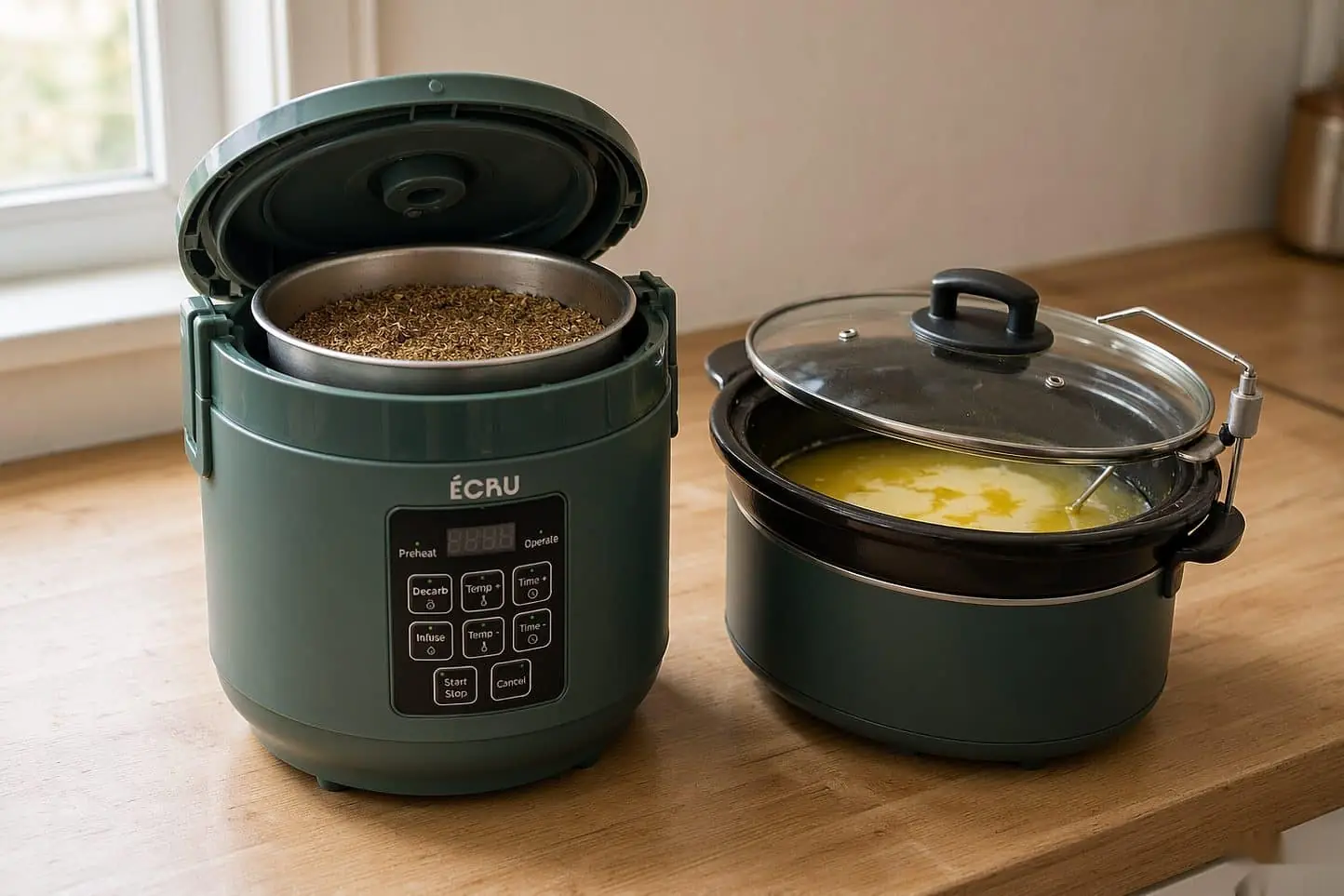
Both infuse; only the canister decarbs. The cooker handles stage two well.
Budget: slow cooker wins. If a cooker already sits in your cupboard, the only purchase is a thermometer.
Smell: decarboxylator wins. The infusion smells mildly buttery either way. The decarb is the pungent stage, and an open oven tray broadcasts it while a gasketed canister holds most of it in.
Consistency: decarboxylator wins, with a caveat. A unit that holds both bands removes the thermometer watch. But check what the unit actually does: a machine that only melts and mixes is an infuser, not a decarboxylator, and leaves activation to your oven. The ÉCRU 2 in 1 Decarboxylator & Infuser 3oz runs independent Decarb and Infuse cycles with a 3 oz dry and 20 oz liquid capacity, so a full butter-and-water batch fits in one canister. The ÉCRU Herb Decarboxylator Green 2oz is a decarb-first unit at 2 oz dry and 10 oz liquid: decarb the full amount in it, then halve the butter and water to infuse in the canister or run the full batch in the cooker.
Neither option fixes a skipped decarb. That is the only absolute in this comparison.
Storage and safety notes
Treat finished cannabutter like opened butter: weeks refrigerated, a few months frozen wrapped against air. Keep it covered in the back of the fridge with the batch date on the label, and out of reach of children and pets, since it looks like ordinary food. Work with material that is legal where you live. Nothing here is medical advice.
The short version
Slow-cooker cannabutter works when the stages run in order: 240°F (115°C) for 30-40 minutes dry in the oven, 160-190°F (70-90°C) for 1-2 hours wet in the cooker, no squeezing at the strain, and a cold rinse before baking. The cooker handles stage two well. It cannot do stage one.
The procedure, step by step
Decarb the flower in the oven
Spread 7 g of coarsely ground flower in a thin layer on a lined tray and bake at 240°F (115°C) for 30-40 minutes until golden and toasted-smelling. A slow cooker cannot run this dry-heat stage, so the oven does it first.
Set up the slow cooker with butter and water
Add 227 g (1 cup, 2 sticks) of unsalted butter and 240 ml (1 cup) of water to the slow cooker. Warm on low until the butter is fully melted, then check with a thermometer that the mixture reads within 160-190°F (70-90°C) before the flower goes in.
Infuse low for 1-2 hours
Stir in the cooled, decarbed flower, cover, and hold between 160°F and 190°F for 1-2 hours. Stir twice, leave the lid ajar or lift it briefly if the mixture climbs past 190°F, and add a splash of warm water if the level drops.
Strain without pressing
Pour the warm mixture through cheesecloth set in a fine mesh sieve into a heatproof glass jar. Let it drain on its own; squeezing the bundle pushes waxes and chlorophyll into the fat.
Cool, rinse, and set
Cool the jar to room temperature, then refrigerate until the butter firms on top, a few hours or overnight. Lift the set butter off, rinse the underside under cold running water, blot dry, and label with the flower weight and batch date.
More guides
- Decarb Temperature Chart: Times and Temps That WorkA cannabis decarb temperature chart for flower, kief, hash, and hemp, with the research behind the numbers and where those numbers stop applying at home.August 29, 2026
- How to Decarb Without Smell: 7 Methods That WorkDecarb cannabis without filling the house with smell. Compare oven tricks, mason jars, smell-proof bags, and countertop decarboxylators for odor control.August 28, 2026
- Cannabutter Recipe: The Machine MethodA cannabutter recipe built around two stages: decarb at 240°F for 30-40 minutes, then infuse in butter at 160-190°F for 1-2 hours, strain, rinse, and set.August 24, 2026
- Cannabutter Cookies Recipe: Dosing by the CookieA cannabutter cookies recipe built for portion control: batch THC math, mild-batch butter ratios, and even scoops so each cookie holds a known share.October 7, 2026
Decarb it the easy way
Herb Decarboxylator Green 2oz
2 oz dry / 10 oz liquid · 3 preset heat cycles
$99.99View product2 in 1 Decarboxylator & Infuser 3oz
3 oz dry / 20 oz liquid · Independent Decarb and Infuse modes
$129.99View product
Questions about this method or your ÉCRU? Contact ÉCRU support — warranty, shipping, and returns help in one place.